hvac
Dirty AC Coils in Texas Heat: Signs, Cost and the Fix
Published by Lantern Home Services
Short answer
Dirty AC coils show up as weak cooling, a system that runs all day, rising electric bills, short cycles, ice or a musty smell. The fix is cleaning the coil, which Lantern lists starting at $99, ideally every spring. Left alone, the strain can reach the compressor.
Anyone who has lived through a Fort Worth summer knows that when the heat settles in for weeks at a time, your air conditioner is not just an appliance. It is a lifeline. This guide covers AC coil cleaning in DFW: the signs, the cost, and what you can safely do yourself.
A Fort Worth AC that could not breathe
Recently, Lantern Home Services was called out to a home in Fort Worth where the AC was running nonstop but struggling to keep the house cool. When our technician walked around to the outdoor condenser unit, the problem was obvious within seconds.
The outdoor coil was buried under a thick, felt-like blanket of dust, grass clippings, pet hair and airborne debris. The system was literally suffocating.
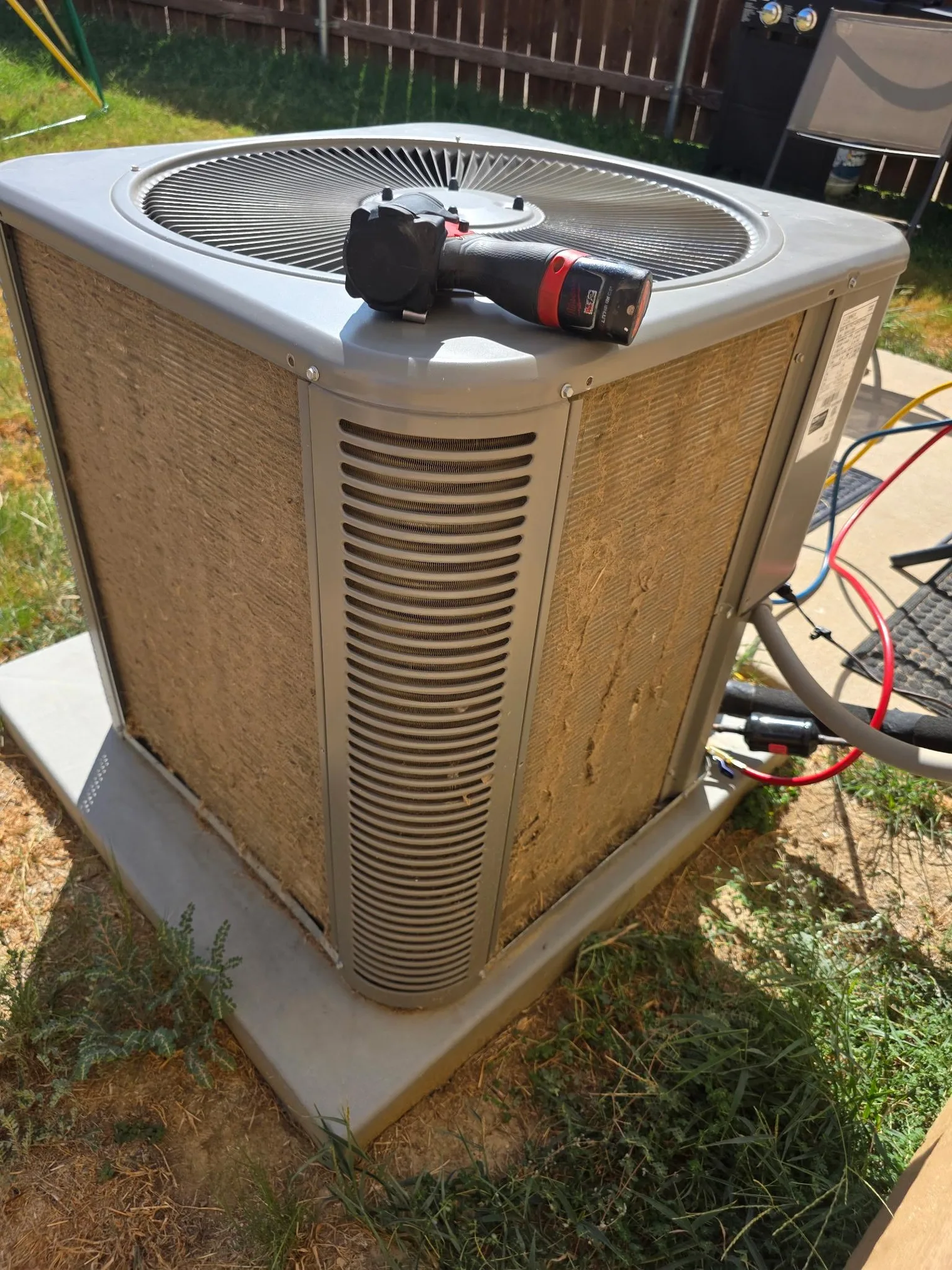
Before: thick dirt and lint blocking the heat from leaving the unit.
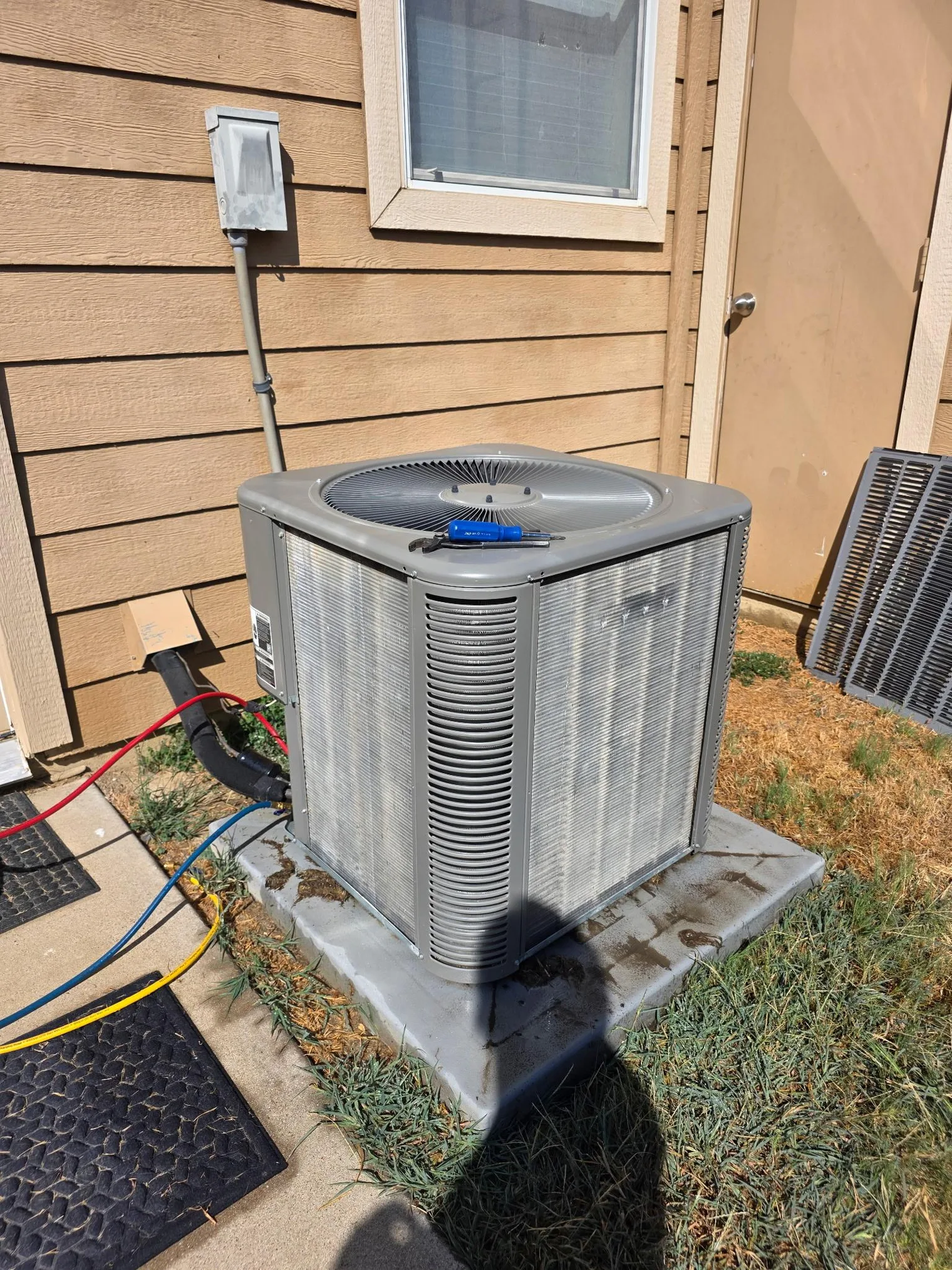
After: rinsed and cleared fins, ready to move air again.
Once we thoroughly washed and cleared the coil, airflow was restored, system pressure stabilized, and cold air was flowing back through the vents within minutes.
That job had a happy ending. Neglect like that usually does not, and here is why coil maintenance matters so much for North Texas homeowners.
Signs of a dirty AC coil in Fort Worth
Your system rarely fails without warning. A coil that is slowly clogging gives hints for weeks, and most of them look like “the AC is just tired this summer.” Here is what to watch for and what each one tends to mean.
| What you notice | What it often means | Safe to check yourself? |
|---|---|---|
| House takes longer to cool, or vents feel lukewarm | Heat cannot leave through a matted coil | Yes, look at the outdoor unit |
| AC runs almost all day | Long cycles trying to make up for poor heat transfer | Yes, note the run times |
| Electric bill climbs with no change in habits | The system works harder for the same cooling | Yes, compare to last summer |
| Turns on and off more than usual | Pressure and temperature swing across a dirty coil | Watch it, then call |
| Ice on the indoor coil or the copper lines | Airflow problem, often a dirty filter or indoor coil | Turn cooling off and call |
| Musty or sour smell from the vents | Moisture and grime on the indoor coil | Check the filter, then call |
Two or three of these together is a strong hint. One alone can be a thermostat or a filter, so rule out the easy things first. Our AC running but not cooling post walks through those.
Condenser coil or evaporator coil: which one is dirty?
A central AC has two coils, and they get dirty in different ways.
The condenser coil lives in the outdoor unit and releases the heat your system pulled out of the house. It collects what the yard throws at it: dust, pollen, cottonwood fluff, grass clippings and pet hair. This is the coil in the Fort Worth job above, and the one you can see.
The evaporator coil sits indoors near the air handler and absorbs heat and moisture from your house air. It gets slimy rather than fuzzy, because it stays wet. A dirty one tends to cause ice, a musty smell and weak airflow. It is behind a panel and close to refrigerant, so it is a job for a technician.
The outdoor unit is where most Fort Worth homeowners can learn something just by looking. If the fins look gray and matted, or you cannot see light through them, that is a clue.
A dirty coil makes your Fort Worth system run longer and cost more
Your outdoor unit has one job: release the heat collected from inside your house into the outside air.
When dirt coats the condenser coil, it acts like insulation. The heat has nowhere to go, so the system runs longer cycles to bring the indoor temperature down even a couple of degrees. ENERGY STAR says dirty coils cut the system’s ability to cool the home, keep it running longer, raise energy costs and shorten equipment life.
In a long Fort Worth summer, that adds up. A system that runs all afternoon is also a system that has less rest between cycles, which is exactly when a worn part gives out.
A dirty coil can wear out your compressor early
The compressor is the heart of your cooling system. When airflow is blocked and heat is trapped, pressures and operating temperatures inside the sealed refrigerant system climb.
Running under that kind of stress through a Texas heat wave eventually leads to:
- Overheated motors
- Burned-out capacitors and contactors
- Compressor failure
A failed compressor is one of the most expensive repairs in HVAC, and on an older system it can push the decision toward replacing the whole unit years before you planned to. If you are weighing that call, our repair or replace guide has a calculator.
Can you clean AC coils yourself?
You can do a gentle version of it, and it often helps. The outdoor coil is the only one worth touching.
- Turn the AC breaker off in the main panel.
- Pull leaves, grass and cottonwood off the outside of the unit by hand.
- Rinse the fins from the outside with a garden hose on a gentle setting, working in the direction of the fins.
- Skip the pressure washer. It bends fins and packs dirt deeper.
- Trim plants and keep clippings from blowing into the unit when you mow.
That only cleans the surface. A coil is thick, and dirt can sit deep inside it where a hose cannot reach. Anything involving chemical cleaners, the indoor coil, a panel or refrigerant lines belongs to a technician. If the unit hums without starting, turn it off at the thermostat and the breaker and leave it for a technician. If you smell burning or see sparks, stop, switch the system off at the thermostat, shut off its breaker if you can reach it safely, stay away from the unit, and call for service. If there is smoke or flame, get everyone out and call 911 from outside.
If the indoor coil or lines are iced over, set the thermostat to off and leave the fan on so the ice can thaw, then call. Running a frozen system can damage the compressor and overflow the drain pan.
What coil cleaning costs in Fort Worth
Cleaning is the cheap end of this problem, and that is the point of doing it early. Here are Lantern’s starting prices next to what is commonly quoted around DFW.
| Service | Lantern starting at | Commonly quoted around DFW |
|---|---|---|
| AC tune-up | $79 | $75 to $150 |
| Condenser coil cleaning | $99 | $100 to $250 |
| AC capacitor or contactor | $185 | $220 to $380 |
| Condenser fan motor | $525 | $500 to $950 |
| Evaporator coil replacement | $1,950 | $1,800 to $3,500 |
Read the table from top to bottom and you see the story. A cleaning costs a small fraction of the parts a dirty coil wears out, and far less than a new evaporator coil. Your final price depends on your system and what the technician finds, so ask for the written quote before work starts.
How often to clean AC coils in Fort Worth, TX
ENERGY STAR lists cleaning the cooling coils as part of annual pre-season care, and it advises having a contractor do a check-up before the season. For most Fort Worth homes that means spring, before the first long stretch of summer heat.
Some homes need more:
- Pets that shed
- Cottonwood or other seed-dropping trees near the unit
- Grass mowed right up to the condenser
- New construction or dusty yards nearby
For those, a quick look at the outdoor unit every month during the cooling season catches a clogged coil before it hurts.
Think of it like an oil change for your car. Nobody expects a car to run smoothly for years without oil changes, new filters and fluid checks. Your AC is no different.
All cooling season, the outdoor unit pulls a huge volume of air through its fins. Dust, cottonwood seed, pollen and lawn clippings build up along with it. A seasonal coil cleaning is the routine care your system relies on to:
- Keep cooling efficiency up
- Keep your electric bill down
- Add years of reliable life to the equipment
Filters matter too. ENERGY STAR advises inspecting or changing them once a month, and a clogged filter pushes dirt and moisture onto the indoor coil.
Keep your cool with Lantern Home Services
A quick seasonal inspection and coil wash can be the difference between a comfortable home and a mid-summer breakdown.
If your AC is running nonstop, blowing lukewarm air, or your electric bill keeps creeping up, do not wait for the compressor to fail. See AC tune-up and coil cleaning for starting prices, or see our AC repair page if something already stopped working. We serve Fort Worth from our Flower Mound base, and our Fort Worth HVAC page has the details. If a maintenance plan appeals to you, the maintenance plan guide has a break-even calculator.
Tell us what your AC is doing in the form below and a Lantern team member will reach out within 24 hours, or call or text (817) 518-4004.
Lantern Home Services is a Flower Mound-based company serving the Dallas-Fort Worth metroplex. See our service areas for the cities we cover.
AC running nonstop in Fort Worth?
Tell us what your AC is doing and how old the system is, and a Lantern team member will reach out to set up a coil check or tune-up. Prefer to talk? Call or text (817) 518-4004.
Common questions
How often should AC coils be cleaned in North Texas?
Have the cooling system checked every spring, before the heavy cooling season. Homes with pets, cottonwood trees, or grass mowed right up to the unit collect debris faster and can need a second look in mid-summer.
What are the signs of a dirty condenser coil?
The AC runs continuously, the air from the vents feels lukewarm, or your electric bill keeps creeping higher. Any of those is a reason to have the outdoor coil looked at before the compressor pays for it.
Is coil cleaning part of an AC tune-up?
Lantern prices them separately: a tune-up starts at $79, and condenser coil cleaning starts at $99, both on the AC tune-up and coil cleaning page. Routine seasonal coil cleaning is still part of the standard care your system relies on.
How much does it cost to clean or fix AC coils?
Lantern lists condenser coil cleaning starting at $99, and commonly quoted DFW prices run between $100 and $250. Replacing an indoor evaporator coil is a much bigger job, starting at $1,950 at Lantern and commonly quoted around DFW between $1,800 and $3,500.
Can dirty coils make an AC stop working?
Yes, over time. A matted coil traps heat, so the system runs hot and long, and that strain can burn out a capacitor, a contactor or a fan motor, or lead to compressor failure. Often the first symptom is simply a house that never quite cools down.
Sources
- Maintenance Checklist ENERGY STAR (U.S. EPA and DOE)