hvac
Before You Turn On the Heat: 10 Checks for DFW Homes
Published by Lantern Home Services
Short answer
Before the first cold night, change the air filter, clear and vacuum the vents, clean around the outdoor unit if you heat with a heat pump, test your smoke and carbon monoxide detectors, and run the heat once on a mild day. Leave burners, gas connections, and the heat exchanger to a technician.
North Texas winters are short, but the first cold snap comes fast. When it does, the temptation in a Dallas-Fort Worth home is to flip the thermostat straight from Cool to Heat and hope for the best. Here are the things to check before turning on the heat, and which ones to leave to a pro.
A little time beforehand pays off. Clearing out summer dust, checking a few key parts, and running the system once on a mild day keeps the house warmer, keeps the air cleaner, and catches problems before the night every HVAC company in the metroplex is booked solid.
Here are the 10 things worth cleaning, checking, and testing before you rely on your heat this season.
1. Air filters
A clogged filter chokes airflow, so the system works harder and your bill goes up. Pull the filter at your furnace or return grille and replace it if it looks gray or dusty. ENERGY STAR recommends inspecting, cleaning, or changing filters once a month in a furnace or heat pump.
2. Supply vents and return grilles
Over spring and summer, dust, pet hair, and dander settle on every floor, wall, and ceiling grille.
- Vacuum the louvers with a brush attachment.
- For heavy buildup, unscrew the covers and wash them in warm, soapy water before putting them back.
- Make sure rugs, curtains, and furniture are not blocking any vents or returns.
3. Baseboard heaters and radiators
If your home has baseboard heaters or radiators, dust on them is what causes that burning smell the first time they kick on.
- Turn the heater off at its breaker in the main panel first.
- Vacuum between the fins and inside the baseboard covers.
- Wipe the surfaces down with a damp microfiber cloth.
4. Around the furnace
Dust finds its way into the furnace cabinet over months of sitting idle or running the blower for cooling.
- Vacuum dust from the outside of the furnace cabinet and the floor around it.
- Leave every access panel in place. The blower compartment holds the control board and live wiring, so it is a job for a technician.
On a gas furnace, leave the burners, gas valve, and heat exchanger alone. Those are for a technician. ENERGY STAR lists checking gas connections, burner combustion, and the heat exchanger as contractor work. A faulty gas connection is a fire hazard and can contribute to health problems. A dirty burner makes the burner run improperly, and a cracked heat exchanger can let carbon monoxide into the air your home breathes.
5. The outdoor unit, if you heat with a heat pump
Many DFW homes heat with a heat pump. If yours does, the outdoor unit does not get a winter break. It runs in reverse, pulling heat from the outside air and moving it indoors. When the coil is matted with dirt, grass clippings, and leaves, it cannot move air, so it heats less and works harder.
This is what that looks like. This was an AC condenser Lantern cleaned on a job in Fort Worth. A heat pump’s outdoor unit looks the same and clogs the same way:
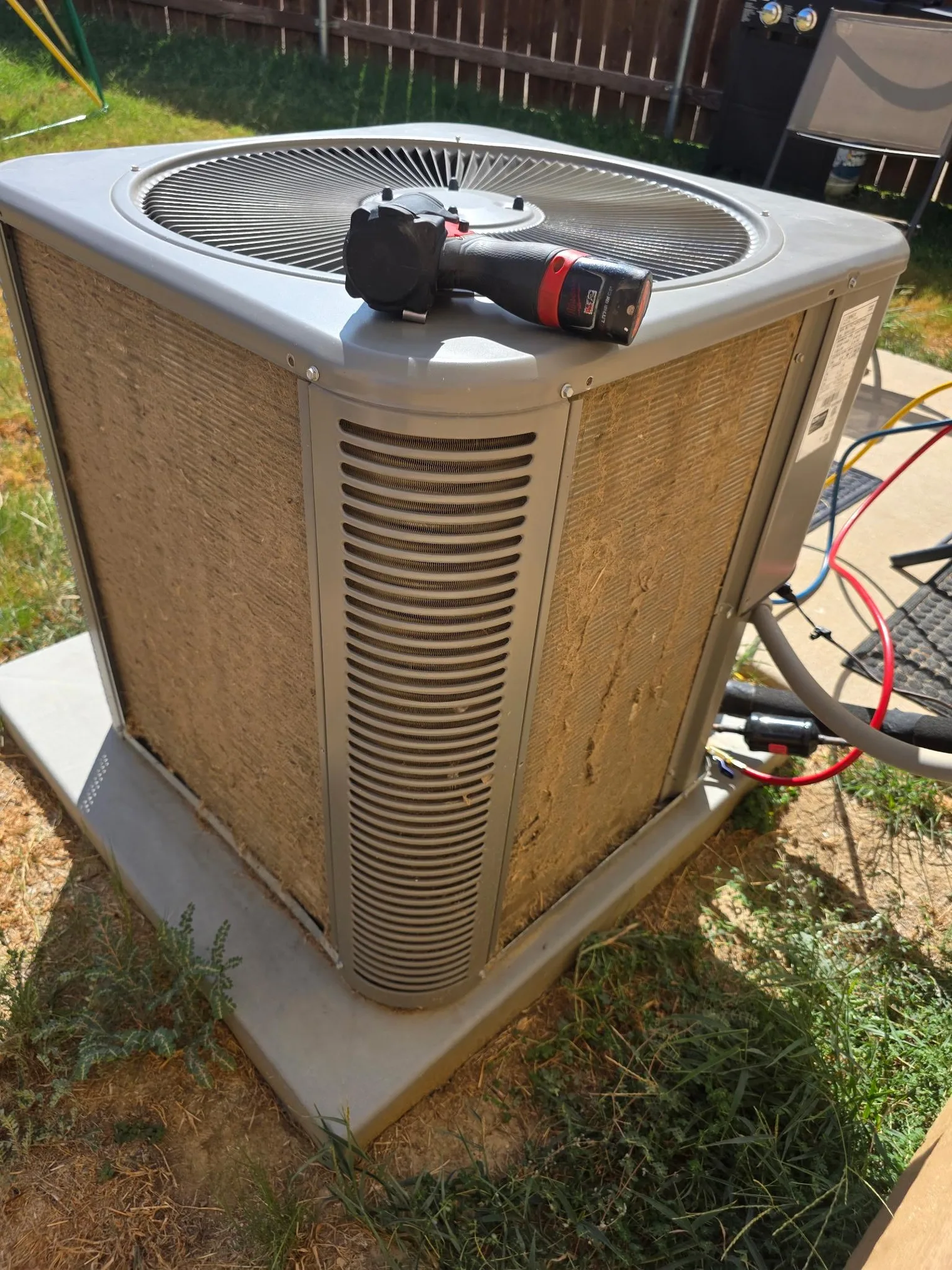
Before: a coil buried under dust and lint. Air cannot get through.
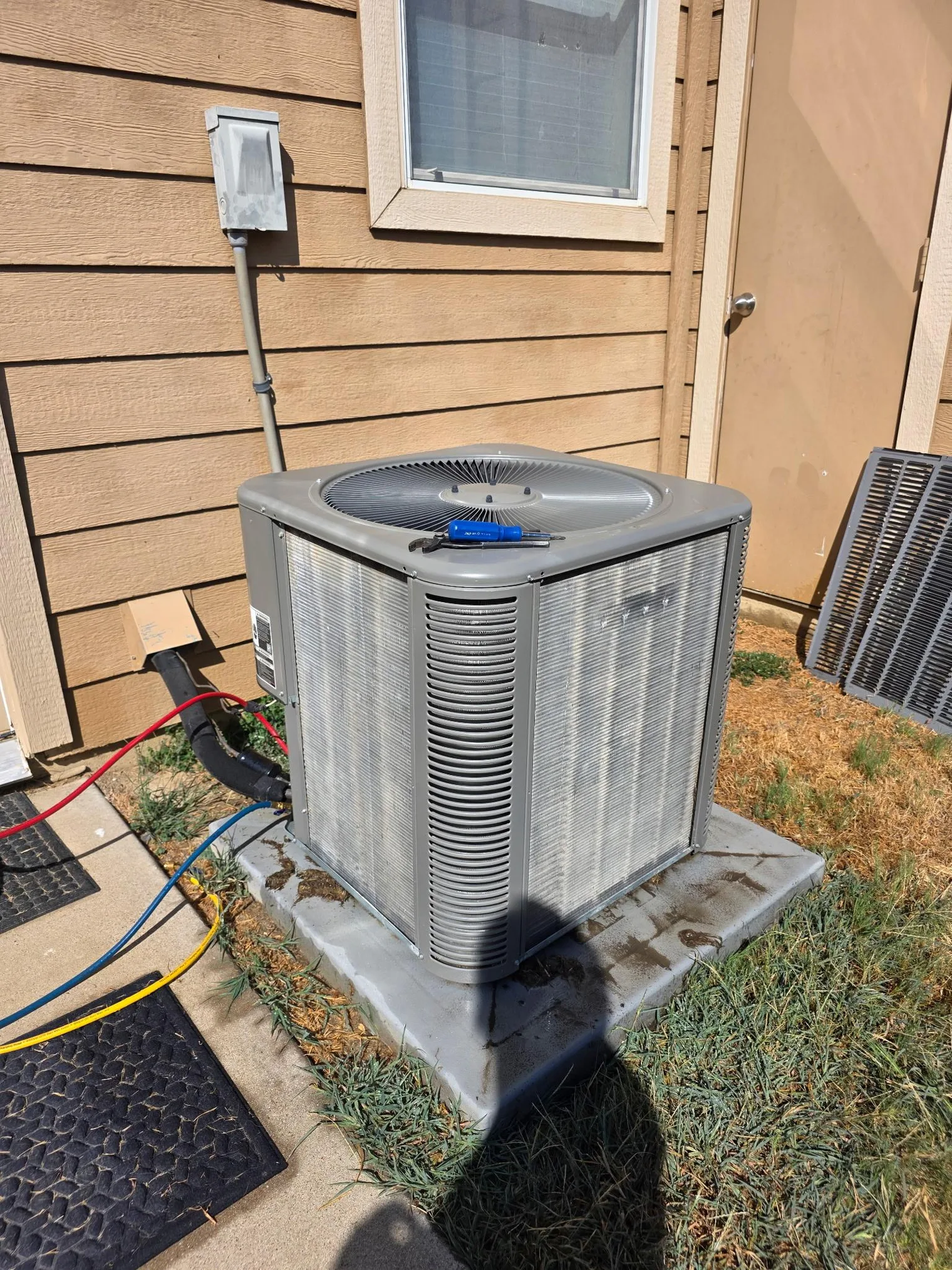
After: rinsed and cleared fins, ready to move air again.
What you can do yourself:
- Clear twigs, leaves, and overgrowth from a couple of feet around the unit.
- Turn the AC breaker off in the main panel, then gently rinse the fins with a garden hose. Skip the pressure washer. It bends the thin aluminum fins.
For a coil as packed as the one above, a professional cleaning gets it fully open again. More on why that matters in our post on dirty AC coils.
6. Chimney and fireplace
Before the first fire, make sure the chimney can vent smoke and carbon monoxide safely.
- Clear out old ash and soot from the firebox.
- Open and close the damper to make sure it moves freely.
- If the chimney has not been cleaned in over a year, have a certified chimney sweep inspect it for creosote buildup and nesting debris.
7. Dryer vent
Not part of the heating system, but worth doing while you are at it. With windows shut and laundry running all winter, a lint-packed dryer vent is a real fire risk. Disconnect the duct, vacuum lint out of both ends, and check that the outside flap opens freely. If your dryer runs on gas, leave this one to a pro, because pulling it out strains the gas connector.
8. Ceiling fans (and flip the direction)
Ceiling fans help in winter too, by pushing the warm air that collects at the ceiling back down into the room.
- Dust the tops of the blades. Slipping an old pillowcase over each blade keeps the dust from falling on the floor.
- Flip the direction switch on the motor housing so the blades turn clockwise on low.
9. Smoke and carbon monoxide detectors
Anything that burns fuel, such as a gas furnace, boiler, water heater, or fireplace, can produce carbon monoxide. Your detectors are the backstop.
- Vacuum the dust off every detector’s vents.
- Press the test button and make sure each one sounds.
- Put in fresh batteries.
If a carbon monoxide alarm ever goes off, get everyone outside to fresh air and call 911 from outside.
10. Do a test run before the first cold snap
Test the heat on a mild day, not on the first freezing night when technicians are booked out.
- Switch the thermostat from Cool to Heat.
- Set it one or two degrees above the current room temperature. On a heat pump, a bigger jump can switch on the backup heat strips instead.
- Listen for rattling, screeching, or banging as the blower and burner start.
- Walk through the house and make sure every room has warm, steady air coming from the vents.
A faint dusty smell for the first few minutes is normal. That is summer dust burning off. If the air stays cold, call a technician. If the smell lingers or smells electrical, switch the system off at the thermostat, shut off its breaker if you can reach it safely, stay away from the unit, and call for service.
If you smell gas, do not touch the thermostat, light switches, or anything that could spark. Get everyone out of the house and call your gas company or 911 from outside.
When to call Lantern
Dusting, filters, and a test run are easy homeowner jobs. Checking burner flames, gas connections, the heat exchanger, and electrical connections is not. ENERGY STAR recommends having the heating system checked by a contractor every fall.
If your heat is not working right, or you want it checked before winter, start with our HVAC services or see where we work across Dallas-Fort Worth. Then tell us what is happening in the form below and a Lantern team member will reach out within 24 hours, or call or text (817) 518-4004. Whoever you call, ask for a written quote before any heating work starts.
Lantern Home Services is a Flower Mound-based company serving the Dallas-Fort Worth metroplex. See our service areas for the cities we cover.
Heat not coming on right in your DFW home?
Tell us what your heat is doing, or that you want it checked before winter, and a Lantern team member will reach out to set up a visit. Prefer to talk? Call or text (817) 518-4004.
Common questions
Is a burning smell normal the first time I turn on the heat?
A faint dusty smell for the first few minutes is normal. Dust that settled on the heating parts over the summer is burning off. If it lingers or smells electrical, switch the system off at the thermostat, shut off its breaker if you can reach it safely, stay away from the unit, and call for service. If it smells like gas, do not touch the thermostat, light switches, or anything that could spark. Get everyone out and call your gas company or 911 from outside.
What should I do if I smell gas?
Do not touch light switches, the thermostat, or anything that could spark. Get everyone out of the house, then call your gas company or 911 from outside. Do not go back in until they say it is safe.
Do I need a heating tune-up if I already did these steps?
The homeowner steps cover dust, airflow, and safety devices. A technician checks what you should not open up yourself: gas connections, burner combustion, the heat exchanger, and electrical connections. ENERGY STAR recommends having the heating system checked every fall.
Do I need to do anything before I turn my heat on?
Yes. Swap a dirty filter, make sure no furniture or rugs cover a vent, clear the area around any outdoor unit, and test your smoke and carbon monoxide detectors. Then run the heat once on a mild afternoon, so a problem shows up before the first freezing night.
How should I set the thermostat for the first test run?
Switch the mode from Cool to Heat, then set the target one or two degrees above the room temperature so the system has a reason to start. On a heat pump, a bigger jump can switch on the backup heat strips instead. Give it a minute or two, since a furnace or heat pump does not blow warm air instantly. Then check each room for steady warm air.
Sources
- Maintenance Checklist ENERGY STAR (U.S. EPA and DOE)