Our work / condensate drain service
Clearing a clogged attic condensate drain before it hit the ceiling
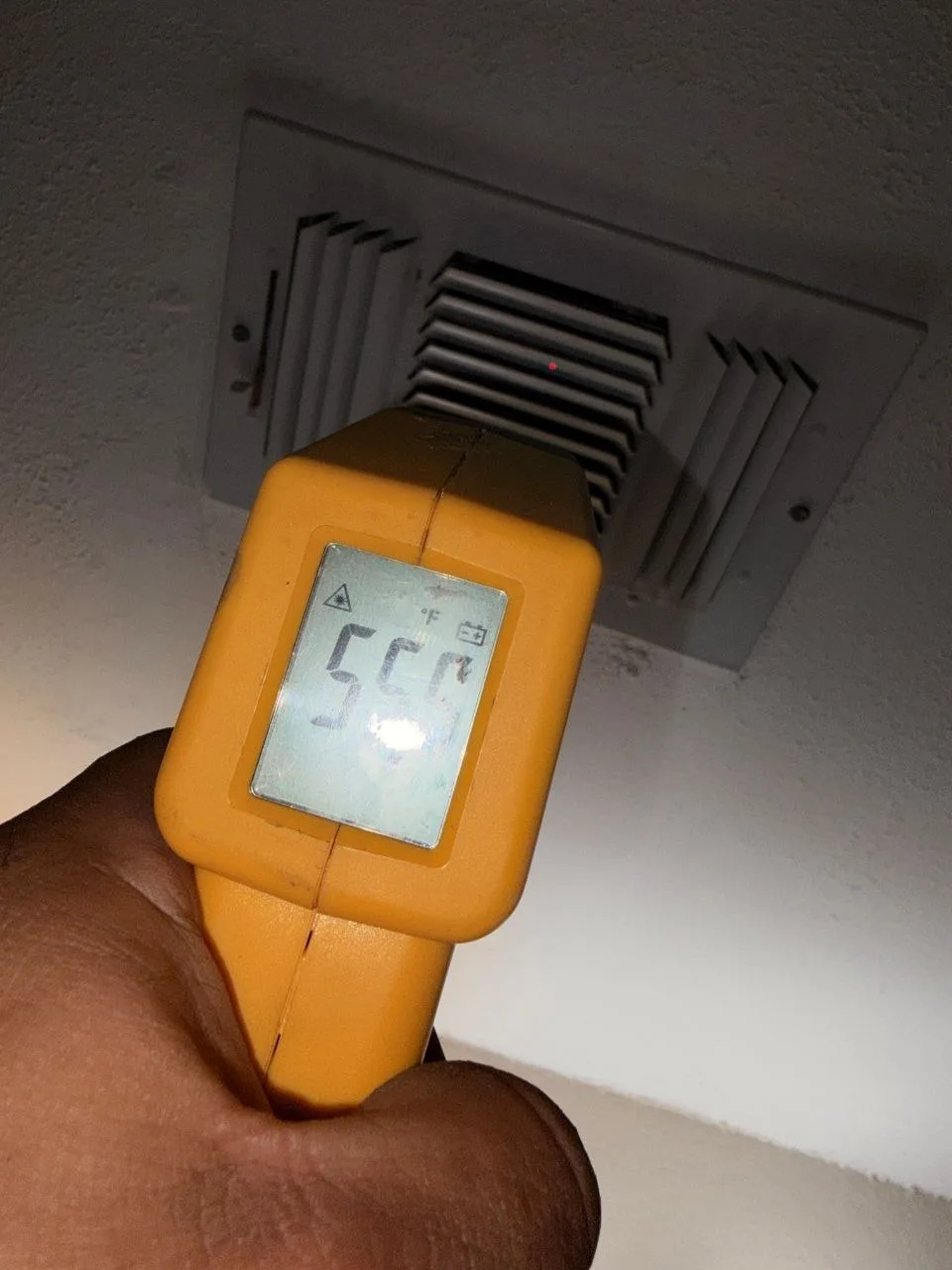
The primary condensate line on an attic air handler had blocked with algae and sediment, so the water the coil pulls out of the air was backing up into the emergency pan above a finished ceiling. We cut the line, purged it with high-pressure nitrogen, extracted the standing water, sealed the corroded pan, re-coupled the PVC, and confirmed a 55.9F supply temperature before leaving.
The air handler in this home sits in the attic, directly above finished ceilings. That is a common layout in DFW and it works fine right up until the condensate drain stops draining.
What was happening
As warm humid air passes over the cooling coil, moisture condenses out of it and has to go somewhere. In a normal setup it runs out through a primary PVC line to the exterior of the house. Underneath the air handler sits a secondary emergency pan to catch anything the primary line does not carry.
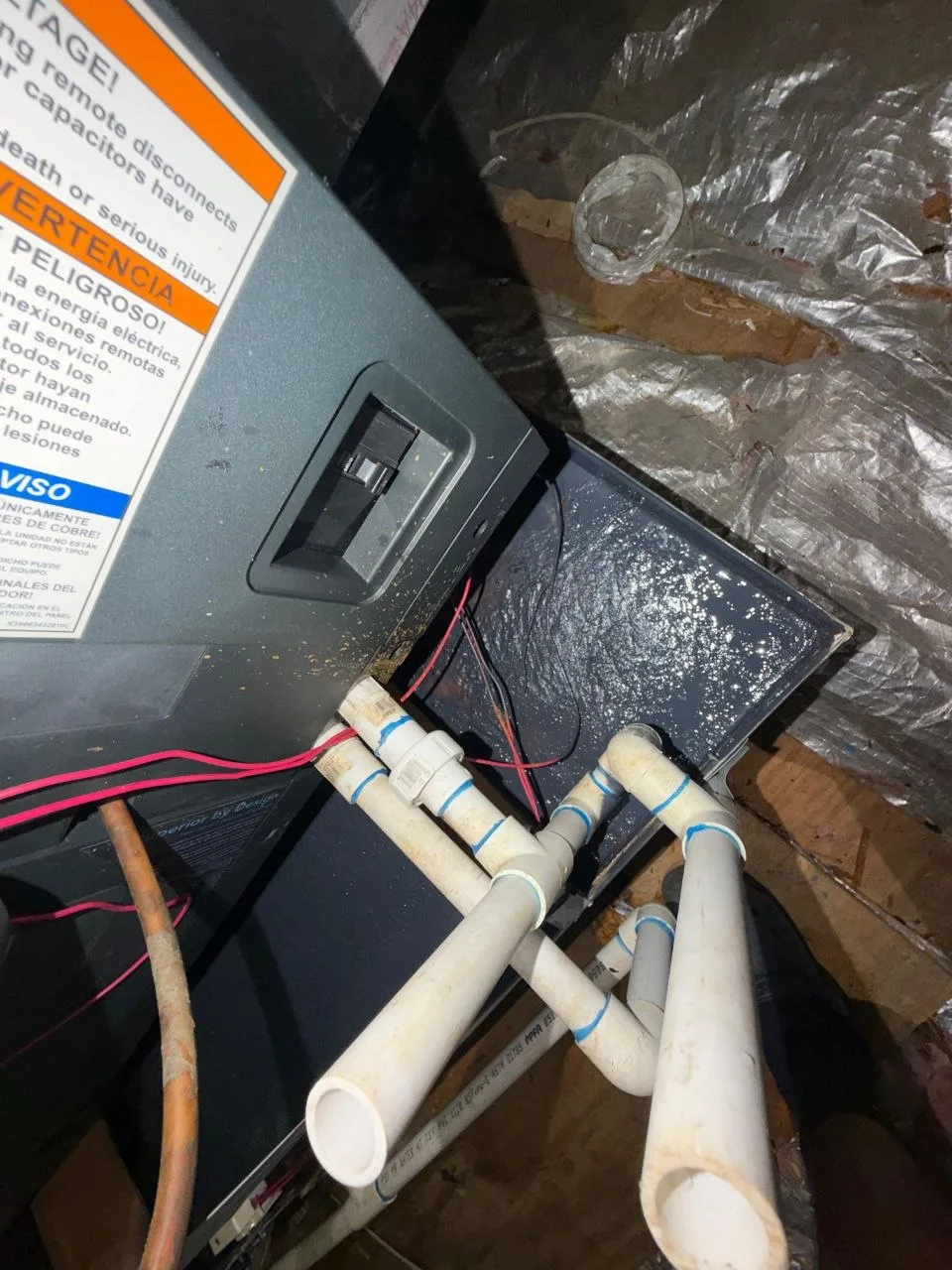
On arrival the primary line was blocked and the emergency pan was holding dirty standing water with rust across the surface. That is two failures stacked: the line that should carry water away had stopped, and the pan catching the overflow had been sitting wet long enough to corrode. Standing water in a metal pan does not stay a water problem. It becomes rust, then pinholes, then a leak into the joists and the drywall below.
The repair
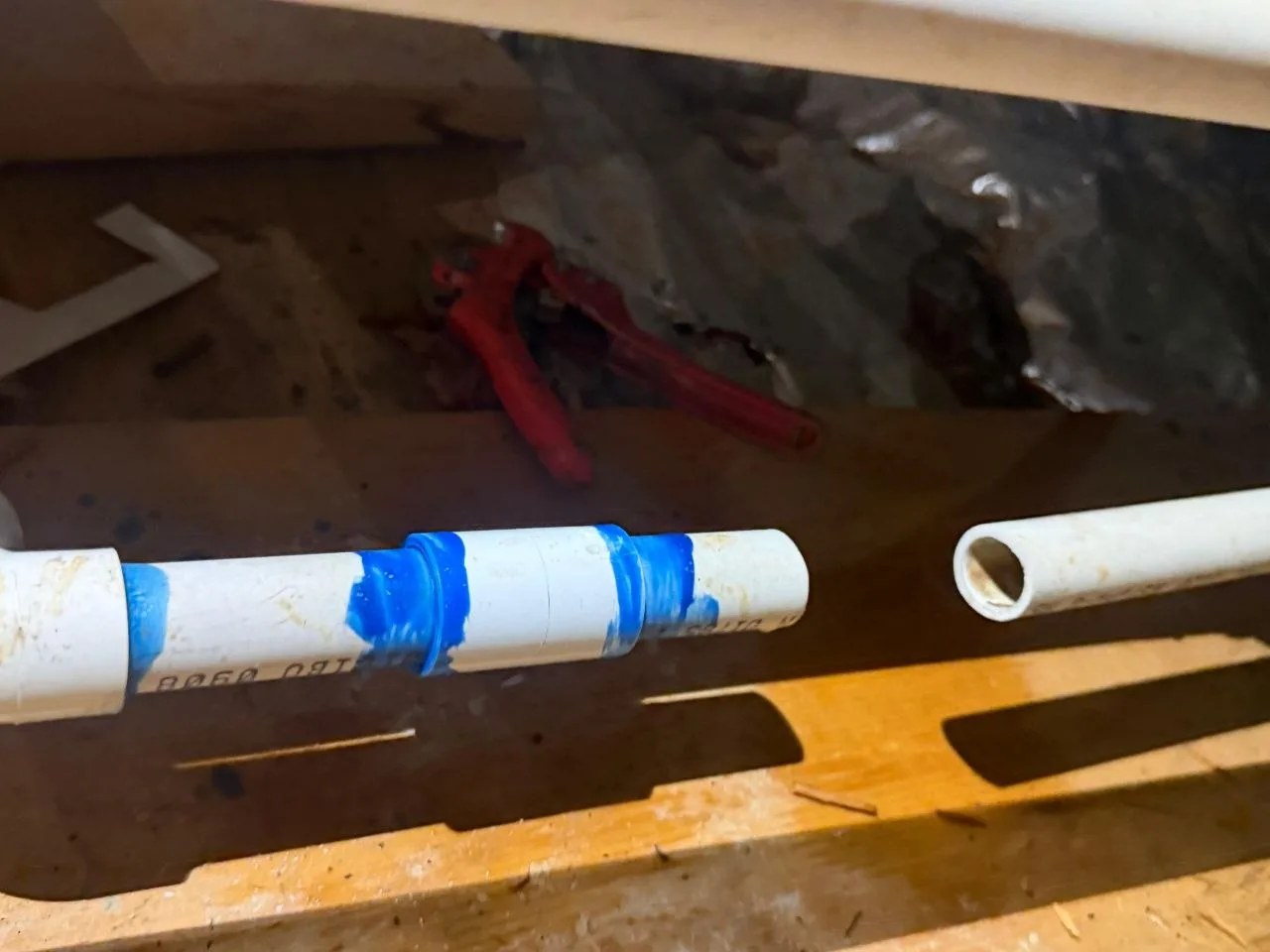
Cutting in and purging the line. Rather than clear the visible end and leave the blockage in place, the drain line was cut open with a ratcheting pipe cutter and a nitrogen tank connected to push a high-pressure dry-gas flush through it. Nitrogen delivers instant kinetic force that breaks apart compacted algae and slime plugs. It adds no moisture and no chemicals to a line that already has a moisture problem.
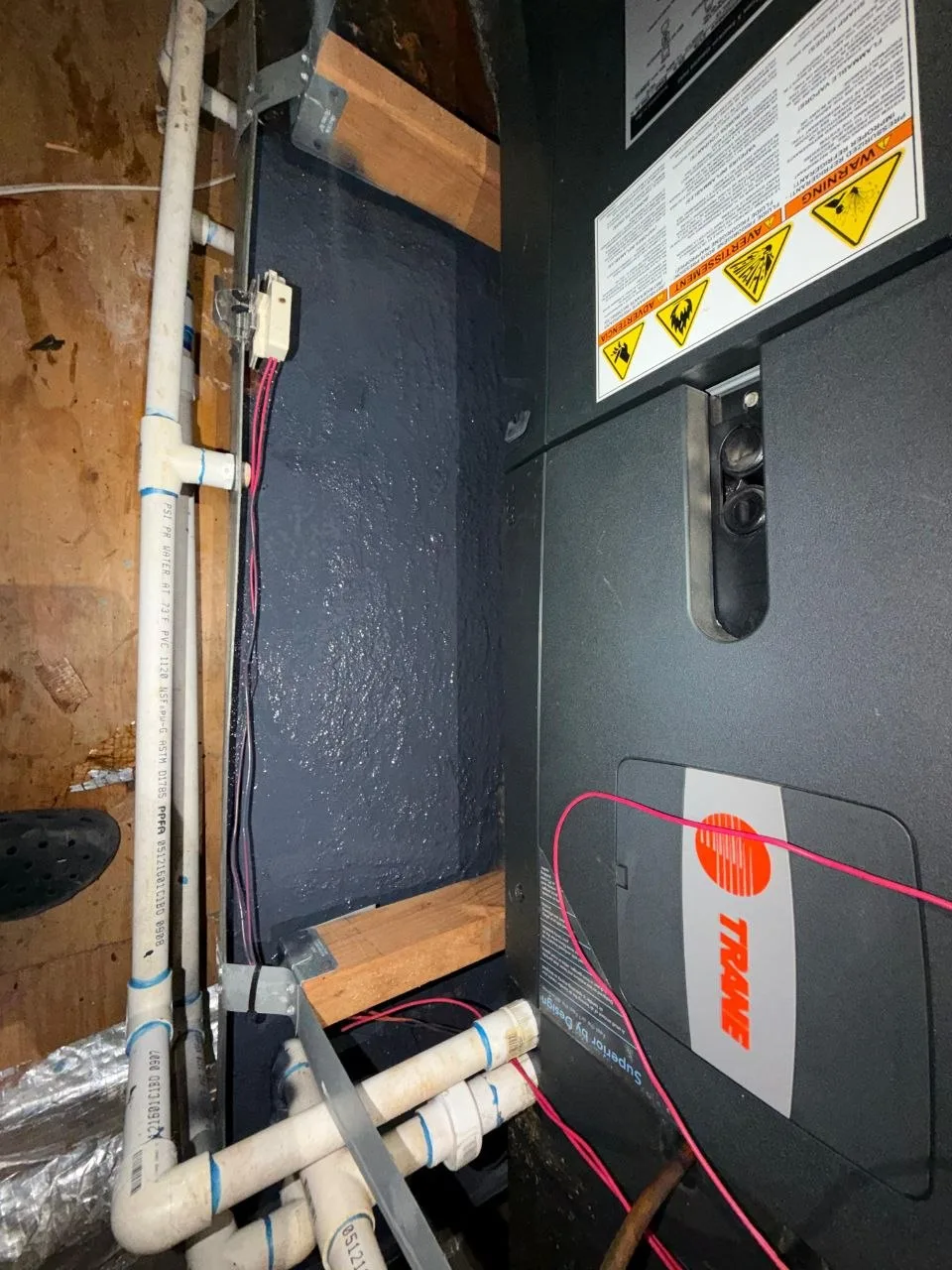
Extraction and sealing the pan. With the line flowing, the standing water was extracted and the loose rust scrubbed off the secondary pan. The pan was then coated with a high-grade Plasti Dip rubber sealant. That flexible layer seals the metal against moisture and stops existing corrosion from spreading into the pinholes that eventually leak.
Reconnection and verification. The drain line was rejoined with industrial PVC primer and cement for a permanent airtight seal, then the system was powered back up and tested.
What the numbers said afterwards
| Check | What we found | What we did | Result |
|---|---|---|---|
| Primary drain line | Severe blockage, algae buildup | Cut the PVC and flushed with high-pressure nitrogen | Cleared and free flowing |
| Attic drain pan | Standing water, surface corrosion | Extracted the water and sealed with Plasti Dip | Dry and waterproofed |
| PVC joint | Separated for clearing | Re-coupled with heavy-duty PVC cement | Leak-proof seal |
| Supply air temperature | Untested until the line was repaired | Measured at the vent with an infrared thermometer | 55.9F, against a target under 60F |
How to keep this from happening
- Get the condensate line flushed on a schedule. Buildup is gradual and clearing it early is a routine job. Clearing it after the pan has corroded is not.
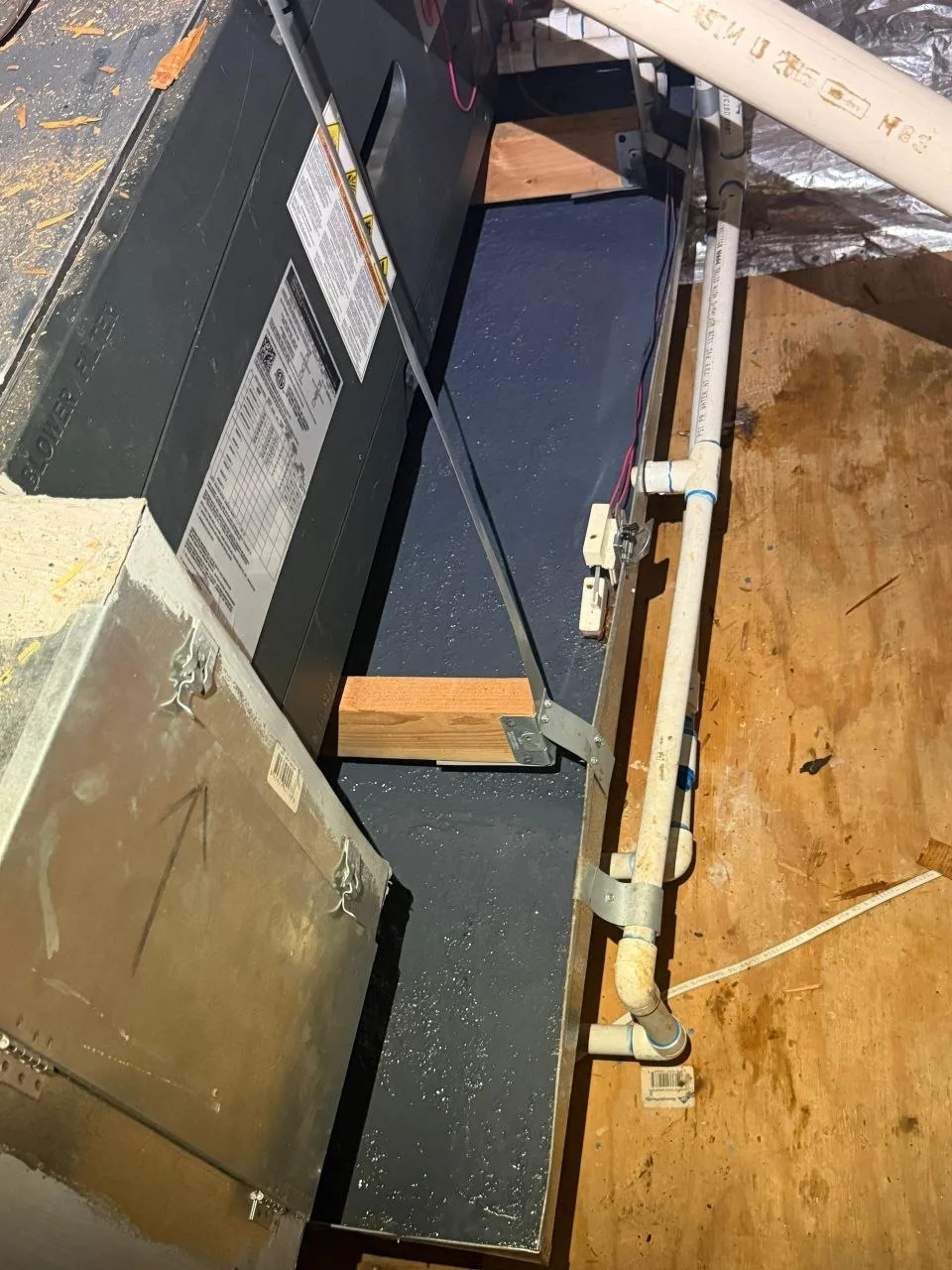
- Fit an emergency float switch. It shuts the system off when water rises in the pan, which is the difference between a service call and a ceiling repair. There is one visible in the overhead photo above.
- Pour distilled white vinegar into the drain access port every few months. It slows algae and microbial growth between visits.
- Look at the pan occasionally in hot weather. If it is wet, something is already wrong upstream of it.
If the secondary exterior drain line is dripping, cooling has gone sluggish, or you suspect water in the attic, it is worth looking before there is a stain on the ceiling.